Japanese Wind Music
JAPANESE COMPOSERS AND WIND MUSIC JUNE 15
A brief overview revised 2006, New version June 2012
Tim Reynish
INDEX
- Wind Bands and Cultural Identity in Japanese Schools
- Introduction
- Narashinodai Daiichi elementary school playing Slava by Bernstein
- Index of Composers mentioned in text
- Main Publishers and CD Producers
- Selected Listing of Japanese Music

Wikipedia states that in 1873, a British traveller claimed that Japanese music, "exasperate[s] beyond all endurance the European breast.” Almost one hundred and forty years later, I have attempted to help Western musical travellers by tracking down information about wind bands and orchestras in what is the second biggest market for music after the USA, a market that outstrips the West in its use of technology.
In 2009 I wrote in my review of the Cincinnati Conference that I hoped someone would write an overview of Japanese music which would guide me and colleagues towards selecting useful works to recommend and programme. In October 2011, the definitive book on Japanese wind music by David Herbert was published by Springer. This detailed research into wind band training in Japan should be in every library, and his interviews with six leading wind band composers must be compulsory reading for anyone interested in Japanese music. Link to Amazon is below:
The World’s Finest School Bands and Largest Music Competition is the title of the first chapter of David Herbert’s wonderful book. For a taste of the extraordinary scope of this scholarly yet readable book, go to the Amazon site and look at the review pages.
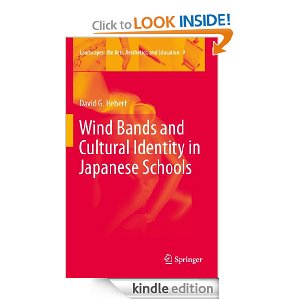
Wind Bands and Cultural Identity in Japanese Schools by David G. Hebert
This well researched volume tells the story of music education in Japan and of the wind band contest organized by the All-Japan Band Association. Identified here for the first time as the world’s largest musical competition, it attracts 14,000 bands and well over 500,000 competitors. The book’s insightful contribution to our understanding of both music and education chronicles music learning in Japanese schools and communities. It examines the contest from a range of perspectives, including those of policy makers, adjudicators, conductors and young musicians. The book is an illuminating window on the world of Japanese wind bands, a unique hybrid tradition that comingles contemporary western idioms with traditional Japanese influences. In addition to its social history of Japanese school music programs, it shows how participation in Japanese school bands contributes to students’ sense of identity, and sheds new light on the process of learning to play European orchestral instruments.
COMPOSERS INDEX
- Masamicz Amano
- Yo Goto
- Taguzo Inagaki
- Yasuhide Ito
- Bin Kaneda
- Yukio Kikuchi
- Chang Su Koh
- Kiyoshige Koyama
- Tetsonosuke Kushida
- Toshio Mashima
- Hideaki Miura
- Akira Miyoshi
- Fumio Tamura
- Satoshi Yagisawa
INTRODUCTION
Japanese wind band music has looked traditionally towards the USA and occasionally UK for inspiration and repertoire. Concerts and contests are full of orchestral transcriptions, American and British music, and Japanese original pieces are often heavily influenced by Hollywood. However, we in the west have not reciprocated by programming Japanese composers. There are two reasons; a great deal of their music follows American formulaic patterns, while more original works are either not published, difficult to obtain or very expensive.
This is my attempt at revising my overview, based on a brief account of my impressions of Japanese music in the past WASBE Conferences, sadly very short, because I felt that there has been very little music of substance – my own prejudices showing here. Below is a selection of Japanese music made from discs and conference concerts of music which I would like to programme. There are of course many other works of real substance and merit which have not appeared at WASBE nor on CD, and are not noted here.
Researching this article led me into something of the life of music in Japan, and it is only now that I understand something of the pressures on composers to write music for a public and for players who are immersed in commercial music for films and computer games. Thus I find that all too often Japanese composers turn to a brash Hollywood approach which will win them many friends but which does nothing to move the medium on. Sadly Japanese concerts in the West, and their CDs, are usually full of this popular style, while pieces of real excellence are more rarely played or recorded. This overview barely scratches the surface of an incredible wealth of music of all types, well worth researching through the huge range of CDs now available from Brain or Kosei. All I can do is to hope that this article will whet the appetite for looking East. This link to a performance of Slava will indicate the technical level of the school bands.
SLAVA by Leonard Bernstein played by Narashinodai Daiichi elementary school
To gain a brief overview of the wealth of Japanese composers writing for wind band, go to the catalogue of Bravo Music publishers and Brain Music CD publishers, and browse through the composers music listed there.
Tokyo Kosei Wind Orchestra Recordings
SELECTIVE LISTING OF JAPANESE MUSIC
| Composer | Work | Publisher |
|---|---|---|
| Masamicz Amano | Yugayo Chugan-azuma kagami ibun | Bravo Music |
| Masamicz Amano | La Suite Excentrique | Bravo Music |
| Yo Goto | The Vein of Water | Bravo Music |
| Yo Goto | Song | Bravo Music |
| Yo Goto | Fantasma Lunaire | Bravo Music |
| Yo Goto | A Prelude to the Shining Day | Bravo Music |
| Hiroshi Hoshina | Deux Paysages Sonores | Kosei |
| Hiroshi Hoshina | Koshi, An Ancient Festival | Hiroshi Hoshina |
| Hiroshi Hoshina | Fu-Mon (Sand Dunes) | Bravo Music |
| Hiroshi Hoshina | Symphonic Metamorphosis | Hiroshi Hoshina |
| Takuzo Inagaki | Three Japanese Folk Songs | Obrasso |
| Yasuhide Ito | Gloriosa | Ongaku no Tomo Sha Co |
| Yasuhide Ito | Festal Scenes | TRN |
| Yasuhide Ito | Sinfonia Singaporiana | |
| Yasuhide Ito | Yet the Sun Rises | |
| Bin Kaneda | Symphonic Movement for Band | Ongaku no Tomo Sha Co. |
| Yukio Kikuchi | Suite for Wind Orchestra | Bravo Music |
| Chang Su Koh | Lament | Bravo Music |
| Chang Su Koh | Mindscape | Bravo Music |
| Kiyoshige Koyama | Hana-Matsuri | |
| Tetsonosuke Kushida | Asuka | Bravo Music |
| Tetsonosuke Kushida | Collage for Band | Bravo Music |
| Tetsonosuke Kushida | Steps by Starlight | Bravo Music |
| Tetsonosuke Kushida | Figuration for Shakuhachi & Band | Bravo Music |
| Tetsonosuke Kushida | Clouds in Collaghe | Bravo Music |
| Tetsonosuke Kushida | Ikargua | Bravo Music |
| Tetsonosuke Kushida | Ritual Fire | Takagi Music Publishing |
| Toshio Mashima | Les Trois Notes du Japon | Bravo Music |
| Toshio Mashima | View with a glimpse of Waves | Kawai |
| Hideaki Miura | Salty Music | Bravo Music |
| Akira Miyoshi | Subliminal Festa/Secret Rites | Maecenas |
| Akira Miyoshi | Stars Atlanpic’96 | |
| Hiroshi Ohguri | Fantasy on Osaka Folk Tunes | Shawnee Press |
| Hiroshi Ohguri | Shin-Wa; A myth for Band | |
| Fumio Tamura | Pretty Woman | Brain |
| Masaru Tanaka | Methuselah 1 |
MASAMICZ AMANO
Amano was born in 1957 in Akita City. He graduated from Kunitachi College of Music at the top of the composition department and finished postgraduate work also at the top of his class. In his university days, he began writing for diverse fields including jazz, rock, folk music, and pops as well as classical and modern music. After graduation, he mastered C.M.I. (Computer Music Instruments) in Australia, becoming a wizard of computer music in Japan as well as the country’s first CD recorded artist. He is very active abroad, especially in Central Europe, recording and conducting his own works with the National Warsaw Philharmonic Orchestra and Versailles Chamber Orchestra, while earning commissions from the Warsaw Brass, Trio Classic and Paderewski Festival. In Japan he earned the excellence prize from the 23rd and 24th Japan Academy Award music section, and the composition & arrangement prize from the 10th “Academic Society of Japan for Winds Percussion & Band” Academy Award. Since 1986, he has produced many windband arrangements from the music of Bartok, Ravel, Akira Miyoshi, Akio Yashiro, Toshiro Mayuzumi, etc., as well as original works and ensemble literature. His works are very frequently performed at All Japan Band Competitions and concerts throughout his country and the world.
Yugayo Chugan-azuma kagami ibun - Masamicz Amano
Rental Bravo Music 1997 Grade 4, duration 7 minutes 25 seconds
Azuma kagami is a history book of the Kamakura era in 12th Century Japan, and the music is redolent with the mystery of that far off age, with the birth of various aspects of Buddhism. I love the sound and the inflections of the Japanese flute, and this work begins with a languorous evocative solo, taken up by figurations in the rest of the band. A cadenza-like passage for marimba and percussion follows, which breaks into a crazy very complex dance which is stilled briefly by voices.
The composer writes:
Azuma Kagami is a history book of the Kamakura era in the ancient time of 12th century Japan. It is said that that has many mysteries, and is hard to understand if you read it just once. In the middle of the original version, the piece is separated into five groups, and each group performs in their own tempo with their own conductor.
Amano, from the Bravo catalogue, has been a prolific writer for bands; I do not know other pieces by Amano, but have heard on YouTube his Classic Cantabile which is a musical switch, dominated by Rhapsody in Blue and including a terrible pop version of Moonlight Sonata, excerpts from Til Eulenspiegl, Beethoven Symphony 7, Rachmaninov etc etc, untrammelled by good taste, but maybe it gives students a “classical” experience! There is a Youtube recording of what I take to be the the 2nd and 4th movements from his
La Suite Excentrique |
He writes:
This work is comprised of four movements. They can be performed collectively or individually. Tempos and expressiveness are clearly affected by how the conductor selects and/or prioritizes certain movements. The 1st Movement begins as muted trumpets introduce a foggy, hazy view. The atmosphere of a whispering forest follows, concluding with a sudden, grandiose pause. The Valse in the 2nd Movement is not bright or saucy like a Viennese waltz, but more Slavic [since I composed the last three movements in Warsaw, it inevitably became so] and somehow ethereal. After the trio, a melancholic waltz drifts towards an interrupted conclusion.The 3rd Movement expresses abyssal solitude. The stillness suddenly quiets with the tolling of a bell.The 4th Movement is framed with violent tutti in odd meter, like bouzouki music. The fierceness persists, warms up, then suddenly finishes with unison Major 7th bell tones. A prominent structural element of the suite is “abruptness”, particularly in the conclusion of each movement. This aspect can be treated assertively.
YO GOTO
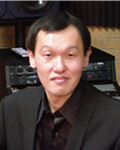
Yo Goto is one of the leading composers and educators in wind and percussion music of today. Educated at Yamagata University in Japan and the University of North Texas, he is making a real contribution to the developing repertoire. I was disappointed in the rather trite version of Funiculi, Funicula which was played at CBDNA, and I was prepared to dislike his fantasy on Beethoven's Moonlight Sonata, Fantasma Lunare; I am afraid that on the whole the genre of wind music which pins contemporary ideas to Bach chorales or southern hymns does not excite me, it is often a compositional cop-out, but when done with a theatrical purpose or with fastidious taste the results can be, as here, completely convincing and very enjoyable. The Ivesian layering of different elements combine with a rich vein of his own melodic invention, and I found this a strong work.
The Vein of Water |
A tribute to the Everglades Grade 4, about seven minutes, available on YouTube played by the Inagakuen Wind Orchestra -
Fantasma Lunare; About Grade 5, eight minutes |
The composer uses fragments of Beethoven's Moonlight Sonata to present a "darker" view of the lunar romantic, in a transparent, hauntingly beautiful journey that holds listeners' rapt attention. Fantasma Lunare was comissioned by the Nakazawa Musicipal Technical High School Symphonic Band, Ishikawa Japan for the performance at La Folle Journee de Kanazawa, an international music festival on May 3, 2008. This work was also well received at the 2009 WASBE Conference in Cincinnati, performance by the University of Louisville
A Prelude To the Shining Day |
played by University of Texas at El Paso Symphonic Band. I wrote after the concert in Luzern by the excellent All Aomori Prefecture High School Band that The opening work, a Prelude to the Shining Day, was predictable in its gestures; however, listening to it again, it is an effective few minutes, swirling woodwind scales set against fanfares in the brass, stirring stuff, more interesting than many fanfares.
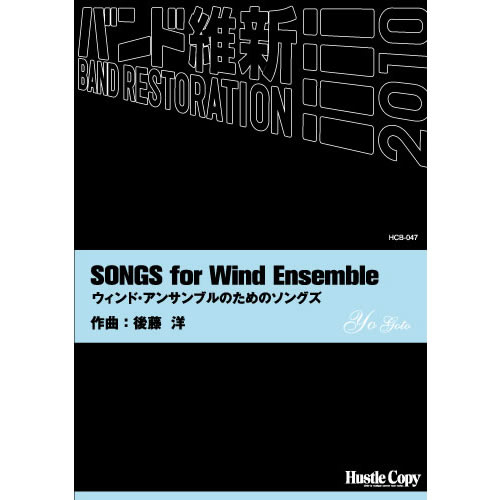
SONGS for Wind Ensemble Yo Goto
Grade 4 8 minutes 10 seconds
This beautiful and reflective piece by master composer and educator Yo Goto won the American Bandmasters Association 2011 Sousa/Ostwald Award. Though of only moderate difficulty, various solo woodwind themes develop into a captivating presentation that is alternately playful and provocative. The clarinet's leading role remains in a comfortable range, with simple and poignant lyricism.
Program note by composer:
Songs (2009) was commissioned by the Hamamatsu Cultural Foundation, Japan. The commission project, titled “Band Ishin” that means “Band Restoration,” commissions new works for wind ensemble from Japanese composers who especially work in the field of orchestra, chorus, jazz, television, and film. The work was completed in December, 2009 and premiered in March, 2010 in Hamamatusu. Goto has written some works that explore musical simultaneity in order to liberate an audience from experiences of linear-oriented time, and Songs is included in such a series of works. This piece requires 24 parts; each part is played by just one player. Therefore, the players are regarded as soloists. Soloists are expected to play simple “songs” and song fragments in their own way and sometimes in their own tempo. Consequently, Songs sounds like an accumulation of freely performed melodies. Although some “songs” have different characters, all of them are derived from a melody played by the clarinet at the beginning of the piece.
HIROSHI HOSHINA
Born in Tokyo in 1936, Hoshina graduated from that city's National University of Fine Arts and Music as a composition major, where his thesis won the Mainichi Music Composition Contest. Aside from his Fu Mon (1987), two additional works have been commissioned for the All Japan Band Contest. In addition, his opera regarding Hiroshima's atomic bomb experience has received worldwide acclaim. Hiroshi Hoshina is a venerable artist of his country; his composition, while traditionally reflective at times, is clearly expressive and visual in contemporary terms. Active as a conductor, clinician and author, Mr. Hoshina is currently professor at Hyogo University of Education.
In 1995, the WASBE Conference in Japan started with an excellent concert from the Osaka Municipal Symphonic Band. I wrote:
Hiroshi Hoshina's music is very typical of a great deal of "serious" contemporary Japanese music, beautifully scored, owing a great deal to the melodic and harmonic idiom of Debussy and Ravel; for me the Symphonic Metamorphosis functions well as a piece, despite a rather trite fanfare section and a "Hollywood" ending. Some of the woodwind solo writing is very eloquent
Hiroshi attended our conference in Sweden in 2003 and conducted a performance of Fu-Mon (Sand Dunes). Hiroshi Hoshina is a much revered figure in Japanese wind band music, an unashamedly romantic composer and a fine conductor - it was good to have him with us. His music is more traditional in idiom, with the impressionistic palette of Ravel and Debussy both in his masterly orchestration but also in the snatches of melody which burst forth. Derivative it might be, but it is also very effective in its use of the colours of the wind band, and with only a hint of American influence in the more grandiose sections I think that any of his works would make a strong addition to the repertoire for a small college, high school or community band. I wrote:
Fu-mon was included as a tribute to Hoshina who conducted the piece with great expertise; I found it attractive but not as strong as two other of his works Deux Paysages Sonores and An Ancient Festival
There appears to be no video on YouTube apart from excerpts, but you can hear a recording on BOCD-7043 by the excellent Osaka Municipal Symphonic Band, Yoshihiro Kimura, Conductor
1. Fu-Mon (Original version)
2. Catastrophe for Symphonic Band
3. Shuei-Mediation for Symphonic Band
4. An Ancient Festival
5. Pastorale
6-11. Lamentation to
TAGUZO INAGAKI
I have been unable to find any information about this composer except that he was born in 1940 and was responsible for some of the arrangements performed by the Tokyo Kosei with Frederick Fennell. In Lucerne, we heard a school band from Aomori a few hours after hearing the powerful Vollharding, but I preferred the school band, and wrote:
Taguzo Inagaki’s Three Japanese Folk Songs seemed to have a limited harmonic palette, but surely here was more imagination and contrast than in the programme by Volharding. The first featured Japanese drumming, a fairly static but energetic introduction, the second movement consisted of three versions of a lyrical modal melodic line beneath a high pedal note, each with more intense scoring, dying away on a little coda tag. A third movement was a moto perpetuo in compound time with considerable energy, with harsh screams from woodwind, rough interjections from brass and percussion. This was Volharding for school band, a useful piece.
YASUHIDE ITO
In the past decades, one of the most internationally active Japanese musicians, as composers, conductor and lecturer, is Yasuhide Ito, whose tone poem Gloriosa was featured in a number of WASBE Conferences.
He was born in Hamamatsu, Shizuoka Prefecture, on December 7th 1960. He started to take piano lessons in his childhood and began studies of composition in his high school days. His first band composition, On the March (1978; published by TRN) was written when he was in his third year of high school. In 1979, he went on to Tokyo University of Fine Arts and Music, majoring composition, and wrote his graduate work in 1986. Ito's musical talent has been widely recognized since he won prizes at the Shizuoka Music Competition (piano, first prize, 1980), Japan Music Competition (composition, third prize, 1982), The Competition for Saxophone Music (1987) and the Band-masters Academic Society of Japan (the Academy Prize, 1994).
I find his music to be unequal. At its best, as in Gloriosa, it is quite powerful and has become one of the most frequently played pieces in the world repertoire. Ito's Symphonic Poem Gloriosa has a wonderful programme of the "hidden Christians" of Kyushu who through the centuries continued to practice their faith, combining their use of Gregorian chant with their native modal melodies. The first movement is a set of free variations on the opening sung plainsong. The second,Cantus, opens with a solo passage for ryuketi, a Japanese type of flute, played with many glissando inflections, and the third, Dies Festus, is based on a folksong from Nagasaki. Festal Scenes also by Ito is a very effective collage of four Japanese folk-songs, scored vivdly and aimed at about Grade 4, well worth exploring. It proved a most popular encore piece for our tour of Japan in 1995. He has composed 38 band works, among which are a Symphony (1990) and Melodies for Wind Ensemble (1995), both commissioned by Tokyo Kosei Wind Orchestra. These four YouTube links will give you an overall idea of his style.
Festival Scenes |
Glorisa |
Sinfonia Singaporiana |
Yet The Sun Rises |
BIN KANEDA
Bin Kaneda was born in 1935. He graduated in 1959 from the Tokyo National University of Fine Arts and Music, where he majored in composition. He has taught at the Tokyo College of Music, Yamaha Nemu MusicAcademy, and Gifu University, and was professor of music at the Aichi Prefectural University of Fine Arts. In 1956, he was placed first in the string music division of the Music Competition of Japan.
Symphonic Movement for Band - Bin Kaneda (1935-1981)
Published Ongaku no Tomo Sya Corp, Grade 4, duration 10.30
Like Tamura's Pretty Woman, this was commissioned by the Yamaha Wind Orchestra; written in 1975 and thus the earliest work of this programme, this is more traditional in idiom, and I suppose you could consider that it comes from the middle ground of late romantic/twentieth century styles. Other works which seem to me which are cast in that mould but written with passion and integrity are Piet Swerts' Cyrano and Jules Strens' Danse Funambulesque to have an integrity, similar perhaps to Marco Pütz' Meltdown or Alexander Comitas' Night on Culbin Sands.
This is emotional music. The programme note says that: Emphasis was laid on hopes to express the symphonic capabilities that are harboured in band music performance patterns and whether or not it was possible to express not only what lies in the surface of the human mind but also the vague emotional feeling that stagnantly lies profoundly in the bottom of one's heart.
Weighty ambitions, but the result for me is a work with tension and contrast, some very exciting writing after the agonized opening statement, built on a falling figure full of yearning This figure becomes the basis for a fast moving fugato, giving way in turn to a slightly sentimental slower section.
YUKIO KIKUCHI
Kikuchi was born in Tokyo in 1964. He attended Tokyo National University of Fine Arts and Music 1983-91, where he studied composition with Akira Kitamura, Shin Sato, and Teizo Matsumura, and after receiving an MA degree, served on the faculty for four years. Presently he teaches composition on faculty at Kunitachi College of Music, Shobi Gakuen School of Music & Media arts. Kikuchi’s works appeared in public early on. His “Saxophones’ Studies”, which won the Composition Competition for Saxophone '86, and "YOHEN" (for piano and orchestra) that won the “Akutagawa” prize for composition 1993, are critically and popularly acclaimed. His orchestral works have been performed by Tokyo’s major symphonies, including commissions premiered by Orchestra Ensemble Kanazawa, conducted by Hiroyuki Iwaki (1994) and Shin Nihon Philharmonic Orchestra (1995). Most recently he has pursued chamber music and wind orchestral works, tirelessly searching for more original sound.
His Suite for Wind Orchestra (14.15 minutes Grade 5) was performed in the WASBE Sweden conference of 2003 by the excellent Kanagawa University Band. I really enjoyed this piece at the Conference and in repeated listening since.
I wrote: The opening Suite for Wind Orchestra is in four movements; the first is a somewhat conventional two minute fanfare but like most Japanese music, sumptuously scored; devotees of John Williams will love the Hollywood ending. The second movement is reminiscent of Ravel, gentle mixed metres, emphasizing flute, clarinet and saxophone colours, while the third began with a riot of Japanese drumming, a raw energy reminiscent of West Side Story, eventually dissipated into a pointillist section with strange chords and motifs. The finale is more extended, a rather portentous introduction leading to a development of the opening motif, by turns pompous and energetic. This should be published and programmed!........ It has - by Bravo Music.
The composer wrote for the Swedish programme
This piece consists of four movements, Fanfare - slow - fast – finale
I composed this piece thinking much of harmony with Db as a main note. The first movement, fanfare, was performed on December 1997 for the first time in the “Banquet of Wind VI Concert of new pieces of wind music by Shobi Wind Orchestra conducted by Masato Sato) I added three more movements and put them together as a suite for “Kyo-en 1, for 20th century Wind Music.
CHANG SU KOH
Chang Su Koh was born in Osaka in 1970. After graduating from Osaka College of Music majoring in composition, he entered the Musik Akademie der Stadt Basel. He has studied composition with Kunihiko Tanaka and Rudolf Kelterborn, and conducting with Jost Meyer to date. He received the 2nd prize from the 5th Suita Music Contest composition section and earned honorable mentions from the 13th Nagoya City Cultural Promotion Contest and from the 1st Zoltán Kodály Memorial International Composers’ Competition. He was also awarded the 12th Asahi Composition prize (“Lament” was a 2002 AJBC test piece) and received the “Master Yves Leleu” prize from the 1st Comines-Warneton International Composition Contest. Presently, he teaches at Osaka College of Music and ESA Conservatory of Music and Wind Instrument Repair Academy, and is also a member of Kansai Modern Music Association. He composes and arranges orchestral, wind and chamber music with commissions from various bands. He also directs amateur orchestras and city bands.
Chang Su Koh was for me one of the most impressive composers of the 2011 Taiwan WASBE Conference, with two fine works played. I wrote: The strongest piece in the all-Japanese evening concert programme played by Osaka was Mindscape by Chang Su Koh. The quite splendid Osaka group played another excellent work by Koh, Lament for Wind Orchestra, one of those extremely rare wind works, a slow unsentimental piece, full of sentiment, first rate. This was also to my mind an object lesson in how to use a traditional musical language in a contemporary way. Some of this work was, dare I say it, beautiful, especially the development of a wind and then brass motif which reminded me of Shostakovich. This is a real piece of music, probably nearer Grade 5 then Grade 4 in its exposed writing and intensity. Highly recommended by the same composer are a set of Korean Dances.
KIYOSHIGE KOYAMA
Hana-Matsuri |
This work opened a recent concert of Japanese music given by the Philharmonic Winds of Singapore under Douglas Bostock. For me it does not succeed in making resolute and monotonous drumming, alternating with pentatonic writing interesting. As I found with a great deal of Asian music in Taiwan Conference, local colour which is not used with imagination is not enough to persuade me of true musical worth.
TETSUNOSUKE KUSHIDA
In England, our first glimpse of Japanese music was back in 1981, when the Honours Band brought the evocative Asuka by Tetsunosuke Kushida.. Born in 1935, he majored in mathematics, but in 1969 won the Japan Bandmasters Association composition competition with Asuka; there is a link below to a performance by the Hong Kong Youth Symphonic Band, which rather accentuates the contrasts between the lyrical and the here (to my mind) overplayed percussion. A link too to Ritual Fire, a work written in 1979 which gives a fine album by the Tokyo Kosei Wind Orchestra its title on KOCD-2904, and to Ikaruga.
Asuka |
Ritual Fire |
Ikaruga |
The Glorious Countryside – Yumenodo – Villagers’ Dance
This very traditional four movement suite reflects the grace and magnificence of an ancient region by the same name. Strongly dorian throughout, dark modal harmonies support haunting melodic lines and soloists, with liberal use of a full percussion section.
There is a CD BOCD 7401 issued by Bravo Music, devoted entirely to the works of Kushida played by the excellent Osaka Municipal Symphonic Band, Yoshihiro Kimura, Conductor, with the following repertoire
1. Asuka* (revision)
2. Bugaku II
3. Collage for Band - On Folk Songs from the Tohoku District*
4. Steps by Starlight - 1st Suite for Band*
5. Autumn in Heian-Kyo
8. Figuration for Shakuhachi & Band *
9. Clouds in Collage *(revision)
10. Ikaruga *(revision)
Works marked with * are published by Brain Music.
TOSHIO MASHIMA
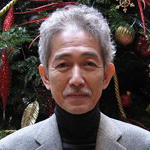
Toshio Mashima was born in Tsuruoka-shi, Yamagata in1949. He entered Yamaha's Band Educator Academy while majoring in technology at Kanagawa University. Mashima studied harmony, composition and arrangement with the late Bin Kaneda and jazz theory under the late Makoto Uchibori. After graduation in 1971, he freelanced on trombone and piano, playing jazz and popular music. Working as an assistant to composer Naohiro Iwai furthered his interest in writing for winds.
Mashima has produced many works for wind band, and is also well known for his outstanding jazz and pops arrangements for both concert and big bands. Noteworthy concert band pieces include the symphonic poem Seascape, selected as a 1985 All Japan Band Competition test piece, a 1991 test piece Coral Blue, and the 1997 test piece Sweet Breeze in May. Others include Mirage I, Jacob's Ladder to a Crescent and Mirage a Paris. More recent works include Les trois notes du Japon, commissioned by the Tokyo Kosei Wind Orchestra in 2001, and Mirage III in 2003. Mirage II (1999) was premiered by Paris' Garde Republicaine Wind Orchestra in July of that year. Mashima has also produced significantly recorded transcriptions of Gershwin's Cuban Overture, Rimsky-Korsakov's Scheherazade Symphonic Suite, and Debussy's L'isle joyeuse to name a few. Mashima is published in Japan, America and Holland, has also scored for television drama, and received an academy award (1997) for composition from the Academic Society of Japan for Wind, Percussion & Band.
Mr. Mashima is presently Instructor at the Shobi Institute of Education and a Special Instructor for the Yamaha Music Academy.
Les trois notes du Japon I. La danse des grues (Tancho cranes' mating dance) |
Les trois notes du Japon II. La riviere enneigee (Snowy river) |
Les trois notes du Japan III. Le fete du feu (Nebuta festival) |
This suite was performed by the Kosei Wind Orchestra under Douglas Bostock in 2001; the music is intended to depict three typical Japanese scenes with western instruments, scales and harmonies. Despite more than a nod toward America and the "big" band sound, the idiom is clearly Japanese. The first movement after a striking opening gesture, is based on a short modal motif which does for fast and slow material in a traditional ABA form. The second movement is extremely evocative of a desolate black and white snow scene, with its consecutive fifth harmonic background, underneath snatches of wind solos.
The third movement storms in with a kaleidoscope of noise, described by the composer:
La fête du feu is the collage of various rhythms and notes describing the vigourous Japanese summer festival. In the middle, summer scenery with towering thunderclouds in the scorching blue sky is expressed. The rhythm of drums approaching from far away is that of the Neputa Festival of the Aomori region where my mother was born.
Paris Montmatre |
PARIS MONTMARTRE played here on YouTube by the excellent Bela Bartok Wind Orchestra is a potpourri of Paris tunes and sounds, unashamedly commercial with every cliché of the light music world of the mid-20th century, but superbly done.
La Danse Du Phenix – Impression De Kyoto Part 1 |
La Danse Du Phenix – Impression De Kyoto Part 2 |
La Danse du Phenix was awarded First Prize in the Coups de Vents in 2006. As with the whole Japanese repertoire, it is wonderfully scored, with effective use of the ethnic sounds, considerable variety of mood.
However, in my overview of the 2011 Taiwan Conference, I wrote:
I was very disappointed with most of the Japanese offerings, which were on the whole cast in American idioms; nothing inherently wrong with that, and if you are looking for a wonderfully scored Hollywood blockbuster, look no further than the works by Toshio Mashima, a composer who really disappointed me at this conference, but whose music I have often enjoyed in the past. Especially disappointing was his Symphonic Poem: Taiwan, superbly scored with his usual skill, but too clearly influenced by American models though the middle section did have some mixed metres and more energy, but this work was not for me.
The second half began with a Hollywood spectacular, The Earth what a Beautiful Planet by the excellent Toshio Mashima. I have greatly enjoyed his music in the past, and felt that his is an important voice in contemporary Japanese wind music, but while this piece showed his enormous prowess as an orchestrator, and what a wonderful orchestra the Kosei is, this was film or Broadway music which we might meet on Friday Night is Music Night on British light Radio or the Oscar Ceremony. That having been said, I woke up one morning in Crete humming an annoying tune which I could not get out of my head until finally recognising it as the main theme from this piece. It met with rapturous applause, and was probably the hit of the Conference but how disappointing to hear the Kosei playing this kind of music. I actually booed albeit quietly, but I was in a minority of one!
ISAO MATSUSHITA
Born November 1951, Tokyo, Isao Matsushita is Japanese composer of mostly orchestral, chamber, choral, and vocal works that have been performed throughout the world; he is also active as a conductor. Mr. Matsushita studied composition with Hiroaki Minami at the Tokyo National University of Fine Arts and Music from 1973–77, where he then studied composition with Toshiro Mayuzumi from 1977–79. He studied composition with Isang Yun at the Hochschule für Musik Berlin from 1979–86. His honors include First Prize in the Mönchengladbach competition (1985, for Toki-no-ito – Threads of Time) and the Irino Prize (1986, a commission to write Toki-no-ito 2). His music has been performed in Australia, Austria, Denmark, Estonia, Germany, Japan, and the USA, including at the Winter Olympics in Nagano (1998).
As a conductor, he served as music director of the Ensemble Kochi in Berlin from 1982–86 and has again served as its music director in Tokyo since 1999. He has also served as music director of Camerata Nagano since 1990 and the Bunkyo Civic Orchestra in Tokyo since 1993 and has also guest-conducted orchestras in Germany and Japan. Mr. Matsushita is also active in other positions. He organized concerts for the Asian Arts Festival of the Agency for Cultural Affairs of Japan in 1999 and served as executive chairman of the Asian Music Week in Yokohama in 2000, the Nagano Music Festival in 2000 and the Asian Music Festival in Tokyo in 2003. In addition, he has served as vice-president of the Japan Federation of Composers since 1997 and served as chairman of the Asian Composers League from 1999–2004. He has taught composition at the Tokyo National University of Fine Arts and Music since 1987 and has been an associate professor of Asian contemporary music and other subjects at its Performing Arts Center since 2003.
Kawai, Ongakunotomo Edition and Zen-on publish his music.
Browse on the titles below for performances by Douglas Bostock with the Philharmonic Winds.
"Hiten-No-Mai" (Dance of the Flying Gods) |
"Hiten-no-Inori" (Prayer of the Flying Gods) & "Hiten-Yu" (Playing of the Flying Gods) |
The critic of the Straits Times, Singapore, wrote recently of this performance:
Beginning with impressionist hues, the music then shifted irreversibly to its main inspiration – the insistent and violent beat of Stravinskys The Rite of Spring. Through this unrelenting score for both musicians and listeners, the ears ached from Tachiro’s pugilism on a number of drums before closing swith a tour de force on the waikado, the biggest drum of themn all. When Stravinsky carefully chose his moments to shock and awe Matsushita seemed to go apoplectic from the outset. It was an impressive showing for certain, but one that was exhausting as well.
HIDEAKI MIURA
It was disappointing that the Central Band of the Japan Air Self Defence Force had to withdraw from the Singapore Conference in 2005 following mobilization of all available help after the Tsunami. They were however replaced by the excellent Senzoku Gakuen College of Music who began their concert with the very amusing Salty Music by Hideaki Miura.
Adam Gorb wrote that:
Salty Music was a great curtain raiser, combining raunchy post West Side Story big band colors with more impressionist sections and moments of epic grandeur.
AKIRA MIYOSHI
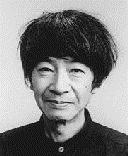
Akira Miyoshi (10/01/1933) a Japanese composer, born in Tokyo. Composer Akira Miyoshi is one of the most prominent and important composers to ever write for the marimba. Much of what he has written has become part of our standard repertoire. Miyoshi has written several solo works for the instrument, a large body of chamber works featuring the marimba prominently, works for choir and marimba, and a concerto for marimba and string orchestra. Miyoshi was born in 1933 and has continued the study of music throughout his life. He received a degree in French literature from the University of Tokyo, specializing in symbolist poetry and existentialism.While there, Miyoshi also studied composition with Raymond Gallois-Montbrun. In 1953 he won first place in the Music Competition of Japan with his "Sonata for Clarinet, Bassoon and Piano." This resulted in a grant to study composition at the Paris Conservatory where Miyoshi studied with Henri Dutilleux. Miyoshi won several Otaka Prizes for works including his "Concerto for Orchestra" and his "Concerto for Cello and Orchestra." He also won the NHK prize for his "Concerto for Violin and Orchestra" as well as the Italia Prize and the Palme Academique in 1984. Miyoshi was named a person of Cultural Merit in 2001 by the Japanese Government. He is a former president of the Toho Gauken School of Music in Tokyo and has served as president of the Tokyo Metropolitan Festival Hall. Miyoshi is still a very active composer today.
Akira Miyoshi I believe is a composer of considerable substance, strongly influenced by his time in Paris and in particular by the music of Dutilleux; two of his works have been played at the WASBE and both are well worth bringing into Western repertoire, Subliminal Festa or Secret ites and Stars Atlanpic.
Subliminal Festa(Secret Rites) - Akira Miyoshi
1988 Grade 4 duration 4 minutes 5 seconds
All Japan Band Association/Maecenas Music
This was written in 1988 for All Japan Band Competition, a work indicating the technical expertise of the Japanese band movement and its potential. In less than five minutes, Miyoshi introduces a post-Stravinsky sound world, full of the swirling energy of the opening pages of Le Sacre - maybe it is the opening bassoon theme that suggests that to me. This is a real piece, useful as a virtuoso opening number, perhaps too short for its myriad of ideas to be developed. It is published by All Japan Band Association but also is on sale from Maecenas Music, so I am biased
Stars Atlanpic ’96 was written for Emory University and premiered in 1991 at a concert celebrating Japanese and American music. The title reflects the choice of Atlanta as the venue for the Olympic Games in 1996, and the three movements evoke the spirit of youth and fellowship. The first movement Encounter, has enormous energy; the second Joy and Sorrow, is more introvert, a lyrical scena of great beauty in an idiom which derives in part from the composer’s studies in Paris with Dutilleux. Celebration is another energetic movement, built on a snappy dance phrase. Miyoshi has a virtuoso approach to the wind ensemble, his musical ideas are far from hackneyed or clichéd and his music never outstays its welcome. I think that his is one of the most exciting voices in contemporary Japanese music.
HIROSHI OHGURI July 9, 1918 - April 18, 1982
The composer, Hiroshi Ohguri, was born in near Osaka into a merchant family, his father was an amateur Gidayu player, and he grew up surrounded by traditional Japanese music. He was introduced to European classical music in 1931, upon his entry into high school, where he joined the wind band and learned to play the French horn. After a spell in his family's store, in 1941 he went to Tokyo, where he joined the Tokyo Symphony Orchestra as a hornist. In 1946 he became principal horn of the Japan Symphony Orchestra; in 1949 he resigned and returned to Osaka, where in 1950 he joined the Osaka Philharmonic Orchestra. Here he remained until 1966. Ohguri also taught music in Kyoto Women's University and Osaka College of Music.
Fantasy on Osaka Folk Tunes
Fantasy on Osaka Folk Tunes was originally commissioned for symphony orchestra by the conductor Takashi Asahina and was premiered by the Berlin Philharmonic Orchestra in 1956. Ohguri transcribed the work for wind band for the Osaka Municipal Symphonic Band in 1974. It is better known in the shorter version of the work, used frequently for band contests, and published by Concert Works Unlimited (Shawnee). No mere stringing together of folk tunes, this is a full-blown free fantasy with tremendous energy underlying all of the material. I wish this were readily available in the west in its full version. There is a wind orchestra version of his Rhapsody on Osaka Nursery Rhymes, and four works for wind orchestra
Rhapsody (1966)
Shinwa (A Myth) - after the Tale of Ama-no-Iwayado (1973)
Burlesque for band (1976)
Kamen Gensō (Mask Fantasy) (1981)
Shin Wa: A Myth |
FUMIO TAMURA
Pretty Woman - Rental Brain Music 1995 Grade 5, duration 9 minutes
This is an unashamed tone poem, based on Checkhov's novel of the same title, and the musical episodes depict each of the men who affect the life of the heroine, each separated by a short chorale passage. The theme of the "pretty woman", Orenka, is stated at the start, and is then treated in four contrasting ways: Orenka and Kukin, the manager of an amusement park, Ornekaand Prostwarlov, the manager of a lumberyard, Orenka and Sumilnine, the vetinarian, andOrenka and Sashya, the son of Sumilnine. This work is tougher than the rest of the programme, and I must confess to having heard a cassette a few times and found the music dense and uncompromising. In this performance, there was so much contrast and detail that I found it very powerful indeed. I was interested to see that Tamura studied with Robert Saxton at the Guildhall, and it was fortuitous that the Guildhall Wind Ensemble played Saxton's only wind work in their concert at the Swedish conference.
SATOSHI YAGISAWA
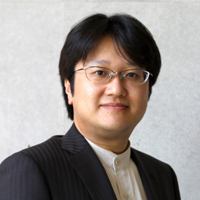
Satoshi Yagisawa was born in 1975 and graduated from the Department of Composition at Musashino Academia Musicae. After completing his master's degree he continued research studies for two additional years.
His compositions for wind orchestra are popular in Japan and many other countries. They were introduced in Teaching Music Through Performance in Band published by GIA Publications in the United States, published by De Haske Publications in Holland and Bravo Music in America, selected as a compulsory piece for the University of North Texas Conductors' Collegium, and performed at the 12th World Association for Symphonic Bands and Ensembles in Singapore and the Midwest Clinic (2008) in Chicago. In Japan, he has composed music for National Arbor Day, National Sports Festival, Japan Intra-High School Athletic Meets as well as numerous leading ensembles in Japan. Yagisawa was appointed Ceremonial Music Director for the National Sports Festival 2010 in the State of Chiba, Japan.
Other professional activities include festival adjudication, guest-conducting, teaching, lecturing, writing columns for music magazines and advisory work for a music publisher. He is one of the most energetic young composers in Japan today. Currently he teaches wind, string, and percussion instruments at Tokyo Music & Media Arts, Shobi. He is also a member of "Kyo-En", an organization that premieres outstanding original works by Japanese composers. Amongst Yagisawa's major works are A Poem for Wind Orchestra - Hymn to the Infinite Sky; Machu Picchu: City in the Sky - The mystery of the hidden Sun Temple; and Perseus - A Hero's Quest in the Heavens.
Hymn to the Infinite Sky - Satoshi Yagisawa |
Hymn to the Sun with the Beat of the Mother Earth |
I wrote:
No problems with balance for the Hollywood style Hymn to the Sun with the Beat of the Mother Earth by Yagisawa which ended the programme. A nice choral episode was memorable, and as with much of the Japanese repertoire, if you are looking for a Broadway-type show stopper, gorgeously scored, this might be for you. How well most of the Japanese composers score for band and how well they imitate American models.
I would greatly appreciate updates on the huge range of Japanese repertoire from colleagues. At its best, in works by Miyoshi or Chang Su Koh, and in a great deal of the writing by others mentioned in this article, Japanese music provides us with an exciting new voice. David G. Herbert gives unique insights into the culture and structure of band music in Japan. Browse on the review version extracts of his book, linked below, to get really excited by this extraordinary world.
Wind Bands and Cultural Identity in Japanese Schools by David G. Hebert
-
Interpreting Specific Works